
Finding Her Voice
The tears streaming down Maeve’s face stood in contrast to the beaming smile growing across her face. Her therapist let her out of their embrace, and a deep breath escaped her lips.
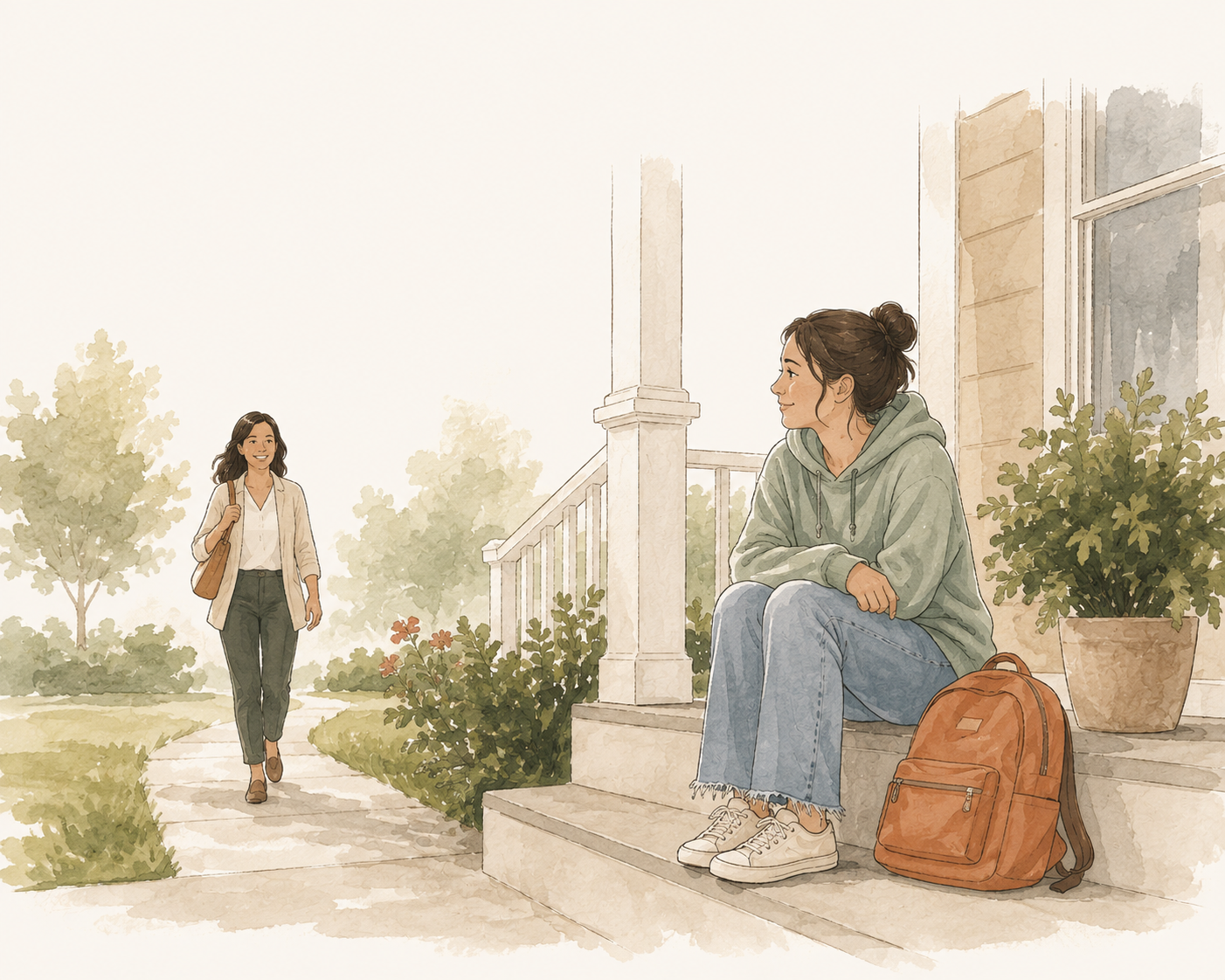
Today was 16-year-old Maeve’s last session with her Savio therapist, Roni. It had been a tiresome six months. But as they lingered on Maeve’s front porch, their smiles reflected just how far they had come.
When Roni first met Maeve, she had to sit on the edge of her bed just to introduce herself. Maeve’s teacher had grown concerned when she stopped coming to school, and shortly after, Maeve was connected to Savio services. Despite agreeing to receive help, Maeve was unable to get herself out of bed. She had been curled up there for several days, fighting yet another depressive episode. But Roni showed up anyway, doing her best to crack a smile across Maeve’s face.
The trauma Maeve had endured as a child had made even leaving her room feel overwhelming. When asked to leave her home, Maeve would begin to shake as anxiety overtook her body. She had cut off her friends, quit the volleyball team, and switched to online school. Her already strained relationship with Mom had grown increasingly combative.
“It just feels like we live on different planets. I don’t get her,” Maeve told Roni during one of their early sessions.
Recognizing the extent of Maeve’s trauma, Roni utilized Eye Movement Desensitization and Reprocessing (EMDR), an evidence-based therapy that helps people reprocess traumatic memories and reduce the symptoms associated with them.
Maeve quickly began making incredible strides. Roni was blown away by the attentiveness Maeve brought to each session and the hard work she put in week after week. It took incredible strength for a teenager to revisit some of the scariest moments of her life, yet Maeve took on the challenge head-on.
Then, one afternoon, Maeve was waiting outside for Roni to arrive. Shaken up, she told her, “I told Mom that I need her to take accountability for what I went through.”
Roni stared at her in disbelief. The soft-spoken teenager standing in front of her had conquered one of her biggest fears. For the first time, Maeve had advocated for herself.
Shortly after, Maeve’s trauma symptoms continued to decrease. She re-enrolled in school and joined an after-school club she had always been interested in. She began making new friends—and even a new boyfriend. She hadn’t had a depressive episode in months. And she knew her worth, telling Roni that she no longer accepted unhealthy relationships into her life.
For the first time in years, Maeve was confident in herself.
And Maeve was smiling.