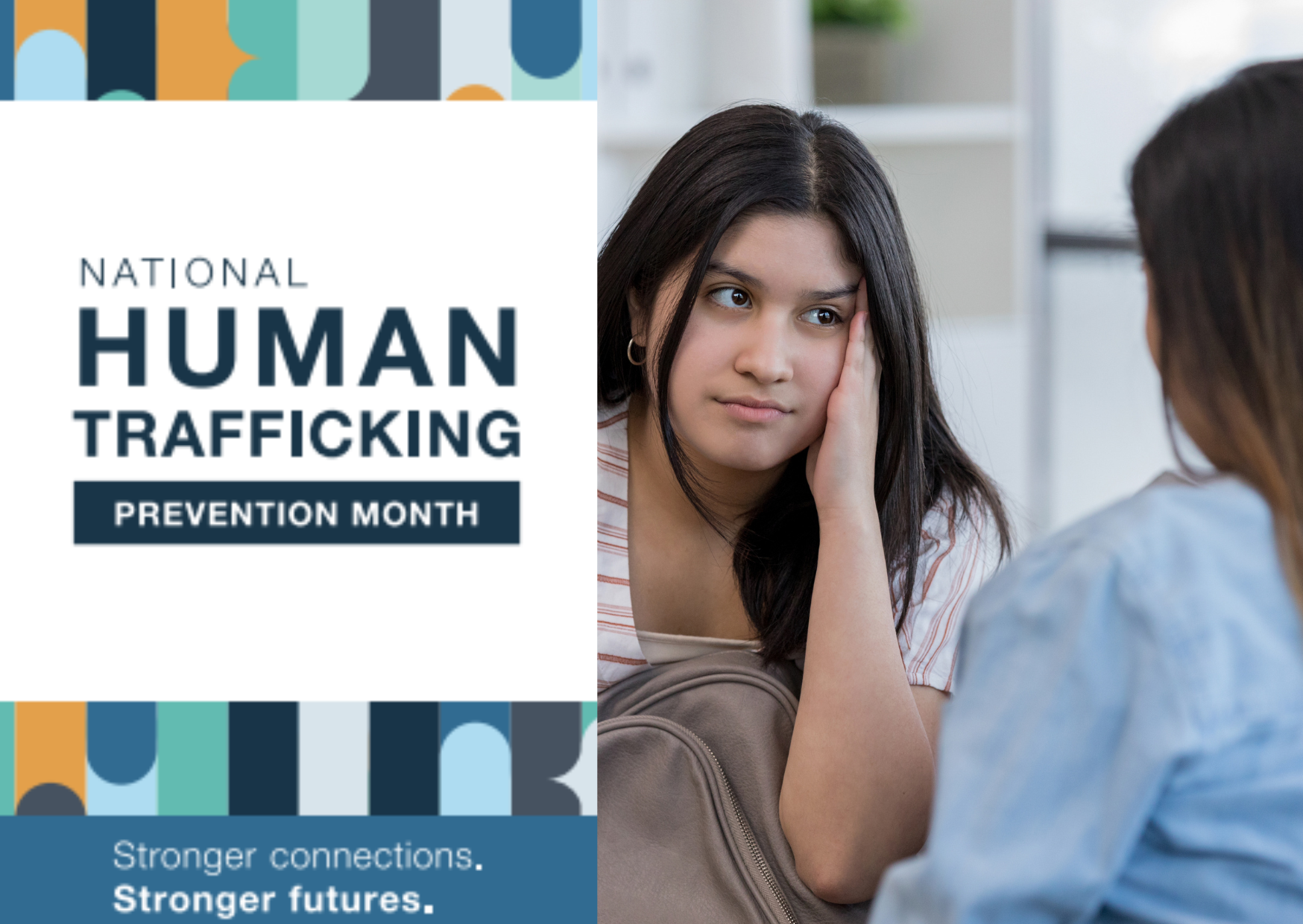
How Can I Help Prevent Human Trafficking in Colorado?
We sat down with Jamie Spinello, LCSW, Savio’s Senior Trauma & Sexual Abuse Intervention Supervisor, to dive deep into the complexities of human trafficking. In this interview, Jamie explains how trafficking truly occurs in our communities and provides actionable steps you can take to prevent it or support a young person in crisis
Q: How would you define human trafficking?
JS: I would say human trafficking is when any individual is bribed, coerced, or manipulated in a situation where they don’t necessarily have freedom of choice to leave. There can oftentimes be a reason that someone stays like money, housing instability, or even legal status – resulting in a lack of options. People might assume sex trafficking is only what makes up human trafficking, and while that category is a subset, it could also involve something like labor.
Q: What are some misconceptions about human trafficking?
JS: I think one major misconception is that all perpetrators are male – when in reality females can also cause harm through human trafficking. Yes, sex trafficking is a female-victim driven industry, however it really can pray upon all genders. It’s also important to recognize that anyone can be at risk, but we do see an increased risk for people who are younger, such as teens (but elderly are susceptible, too), and those who are unhoused or facing housing instability. Sometimes it can be seen in circumstances where there are financial constraints; and young people might be unable to work do to their age and feel like this is an option to better their living situation.
Trafficking can be an unintended consequence of someone trying to obtain legal status. They may be told, “Bring these documents and I can help you” … and then become involved without realizing it.
Q: In what ways have you seen human trafficking start in our community? Who is at risk?
JS: We often see these cases with teens who have a history of running away from home – which can be a result from abuse, not being accepted for their identities, or other patterns of trauma. And sometimes that can lead to further trauma. We also see this happening to kids who are poorly supervised, lacking warmth at home, or have negative relationships in their lives. And sometimes, in certain situations, there’s a generational factor where parents were in a similar place and think, “Well, this is what I did to get by.” It could be normalized in some households.
We know that a lot of things can also happen over social media, particularly for teens and adolescents. Major metropolitan cities — like Denver — can also be a hub for people coming in and out – there’s airports, major highways. And some of these cities have hot spots where kids hang out unsupervised, which creates opportunity to be approached. When someone’s offering you things… it can be tempting and a big component in what we’ve observed.
Q: What are some warning signs for parents or other trusted adults?
JS: Materials things — new, expensive items suddenly showing up. It’s important to question, “Where are these things coming from? Where is the money to buy these things coming from?" Sometimes it can be having a new cell phone that wasn’t purchased for them. Running away, being gone for multiple days, or cutting off contact can be a red flag — it could mean many unpleasant things but trying to figure out where they were or who they were with could help us learn what could be really be going on. And in these cases, youth might not be open about their whereabouts.
Q: What are the effects on mental health and interpersonal relationships you’ve seen in these cases?
JS: It really is unique to each case and can present differently. In some situations, young people can become more withdrawn, nervous, angry, or shut down. In other cases, they could be feeling very inflated or super happy because they now have a secondary gain — but their brain isn’t developed enough to connect that the money or attention they’re getting is not healthy or okay. There can be a denial that anything is wrong. It really depends.
In terms of relationships, it can create a strain with caregivers or other supports. And in turn, sometimes caregivers then don’t know the best way to support kids going through this. Sometimes when receiving mental health help, even more symptoms of trauma can come to the surface.
Q: What can parents do to strengthen connection within their family as a level of prevention?
JS: Things like a daily check in with your kid and asking questions like, “Who did you spend time with” or “What’s been going on lately?” Get to understand your kid’s world, so that if they introduce someone new it’s on your radar. In some cases, caregivers and children might have a strained relationship already. Seeking therapeutic help to build your connection and create warmth at home can help with dialogue.
Also, if you’re worried something is going on, it’s important to ask direct questions and not avoid asking those questions because you’re scared of the answer. Your response is something to keep in mind, too. Being nonjudgmental and trying not to have an overly big reaction… it’s important to keep openness in a conversation about safety.
Q: What are some protective factors for young people?
JS: Having warm relationships in the household and consistent open communication. Being involved in positive behaviors and activities is also a big one — especially with real peers that they know. When there is prosocial connection and community there is security.
Q: What should be kept in mind when a parent or caregiver opens discussion on healthy relationships, safe boundaries, and finding the right balance between screen time and time with family and friends?
JS: Social media and internet safety are things that parents can miss the mark on from not being in the loop. It’s good to have talks about the information we share online, who should or should we not accept as a friend or follower (also distinguishing “Do you really know the person?” and that followers can be strangers). An important reminder for them is that people follow people they don’t know but these platforms give you the ability to engage with each other; and it’s important to be mindful of what you are sharing with them.
Also keeping the door open to conversations. Letting your kids know, “You can talk to me if you’ve made a mistake and or did something you regret.” On a broader scale, teaching kids what healthy vs. unhealthy relationships are. Going over things like, “What is consent?” and how to say “no” and that it’s okay to say “no.” These things aren’t always taught at school, so ensuring you’re having the information reviewed in a home setting is incredibly helpful.
Q: If you suspect that a young person in your life may be in a trafficking situation, where would you refer them or seek help?
JS: Colorado’s Human Trafficking Hotline is available 24 hours a day, every day of the year. You can call 866-455-5075 or text 720-999-9724. Calls and texts are not reported to the police unless otherwise specified. This service can connect victims to help such as safety planning, housing and shelter, mental health support, interpretation/translation, legal assistance, education/job training, and more.
You can also learn more about human trafficking from www.combathumantrafficking.org/hotline or www.acf.gov/otip